17 October 2006

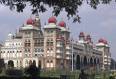
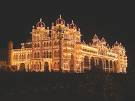
Mysore Palace

The Maharajah’s Palace is a magnificent three-storied structure with a five-storey tower, designed by the English architect Henry Irwin. The famous Mysore palace also known as the Amba Villas Palace is one of the largest palaces in the country. The palace was originally built of wood, which got burnt down in 1897 and was rebuilt in 1912. It is a healthy combination of Dravidian, Indo-Sarcenic, Oriental and Roman styles.


It is attractive both inside and outside. It’s a kaleidoscope of stained glass and mirrors. There are also beautifully carved wooden doors and mosaic floors. The tastefully decorated and intricately carved doors open into luxuriously decorated rooms. The ground floor with an enclosed courtyard display costumes, musical instruments, children’s toys and numerous portraits. The upper floor has a small collection of weapons. The carved mahogany ceilings, solid silver doors, white marble floors and columned Durbar hall are a feast to the eyes.

15 October 2006

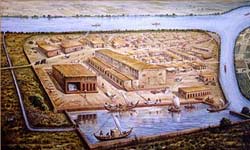
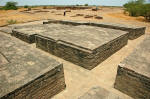
The Dock At Lothal

Lothal city was planned on similar lines as Hadappa and Mohen-jo-daro. The features of which are an orderly array of streets and lanes crossing one another at right-angels and the division of the town into various blocks, which distinguish Indus cities from Mesopotamian and Egyptian towns. Initially, Lothal dock was rectangular on plan measuring 300 mts from north to south and 400 mts from east to west, and was protected against floods by a 13 mts thick wall of mud bricks.

Artificial dock for berthing ships
Lothal city’s engineers made the greatest contributions to the advancement of science and technology by building an artificial dock for berthing ships.
The Lothal dock is noted for its unique water-locking device, introduced in the spill-way, which could be closed or kept open according to necessity. It regulated the flow of water a high tide and ensured flotation of ships at low tide without necessitating the basin to be silted up. The perfect verticality of the inner face of the walls enable ships to come right upto the edge of the wharf for loading and unloading. A trapezoid basin measuring an average 214 x 36 mts was excavated on the eastern flank of the city and closed by masonry walls of kiln-fired bricks, with necessary gaps for the inlet and spillway in the shorter arms on the north and south respectively.


This technology was applied for laying canal network, with intervening water holding tanks and sluice gates put in place to place to control the volume and direction of water flow.

08 October 2006

Rock Cut Culture

No other country has so accurately recorded the carpenter’s craft as practised 2,000 years ago.

Chaitanya Hall at Karla, Maharashtra 1st century BC has a cylindrical vault. Hewn out of a single rock are the details of the joinery and rock-cut columns .It is an apsidal hall excavated into solid rock with rows of pillars running along the walls that supports a curved roof, resting on ribs in imitation of the barrel vaulting of a wooden structure. Most notable development in rock-architecture happened during the period from the seventh to the 10th centuries. The entire Kailas temple at Ellora, Maharashtra (6th Century AD), is the largest single piece of sculpture in the world. Worked from the top to the ground level, this temple complex occupies twice the plinth area of the Parthenon in Greece. Indian craftsmen had mastered the technique of transferring the load from top into the earth by balancing it through the application of poise, counterpoise and load bearing crossbeams.

23 September 2006

Dronacharya Awards and Arjuna Awards

Dronacharya Awards and Arjuna Awards

  • Dronacharya Awards was instituted in 1985 to honour eminent coaches, who have outstandingly and consistently motivated sportspersons to the highest performance in international events.
  • Arjuna Awards was institutd in 196 as the highest national recognition for outstanding performance in sports and games at the international level.

Bravery and Gallantry Awards

Bravery and Gallantry Awards
National Bravery Awards was started in 1957 by the Indian Council for child Welfare. The award was to recognize and honour children who performed outstanding deeds of bravery and selfless sacrifice.

Gallantry Awards The Ashok Chakra series of awards are open to civilians. These awards are biannual and are given on the Republic Day and Independence Day.


28 August 2006

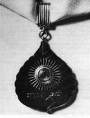
Bharat Ratna and Padma Awards

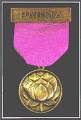
Padma Awards :
Padma Awards namely, Padma Vibhushan, Padma Bhushan andPadma Shree are given for exeptional and distinguished service of high order in any field. The Padma Awards are announced on the eve of the Republic Day.
>>>>>>>>>>>Padma award

BHARAT RATNA AWARDS
The President of India gives the BHARAT RATNA AWARDS , the highest civilian honour, for exceptional service towards advancement of Art, Literature and Science, and in recognition of Publoc Service of the highest order.
Bharat ratna awards<<<<<<<<<<<
Thanks to chyk.
FROM THE BOOK: AWAKENING INDIANS TO INDIA
http://www.chinmayamission.com/